Pokedex
A local MCP bridge that lets Poke route requests to Codex in your configured workspaces, with typed tools for threads, operations, approvals, usage, and git.
Run Codex everywhere.
Poke can trigger the recipe from iMessage, WhatsApp, or Telegram. Pokedex keeps the bridge local: the relay, agent, workspace policy, git checks, and Codex app-server stay on your machine.
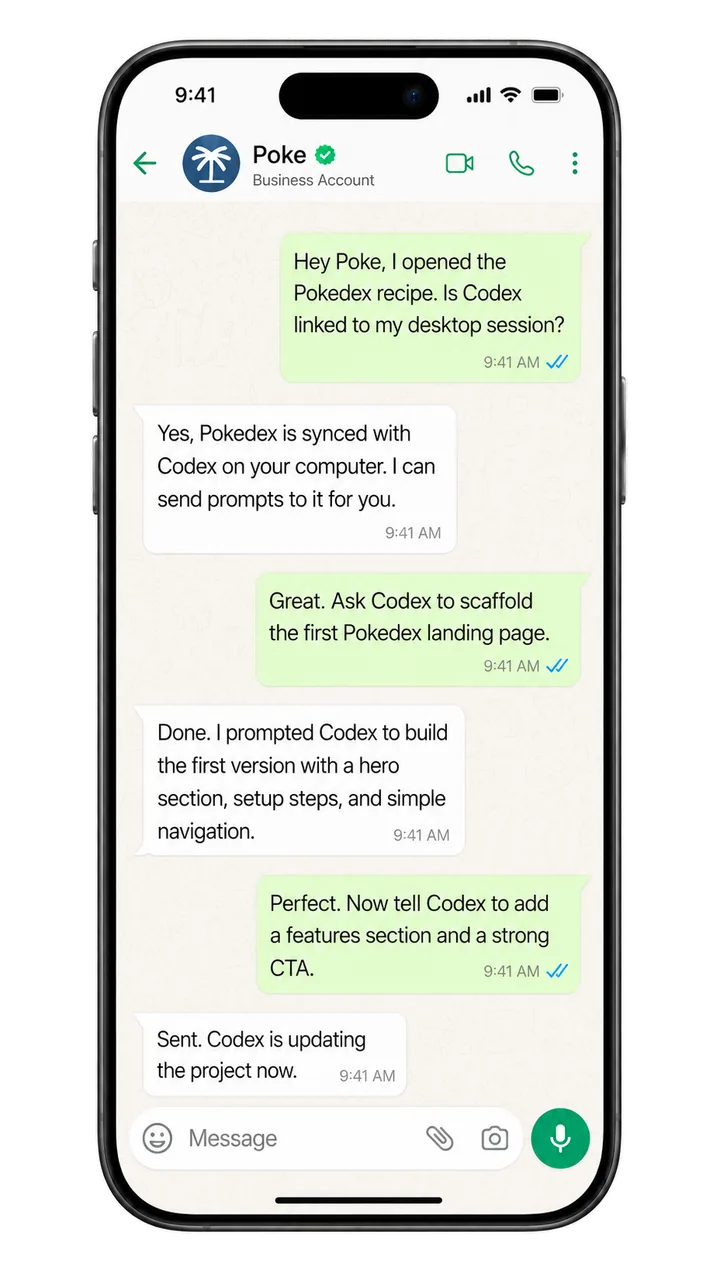
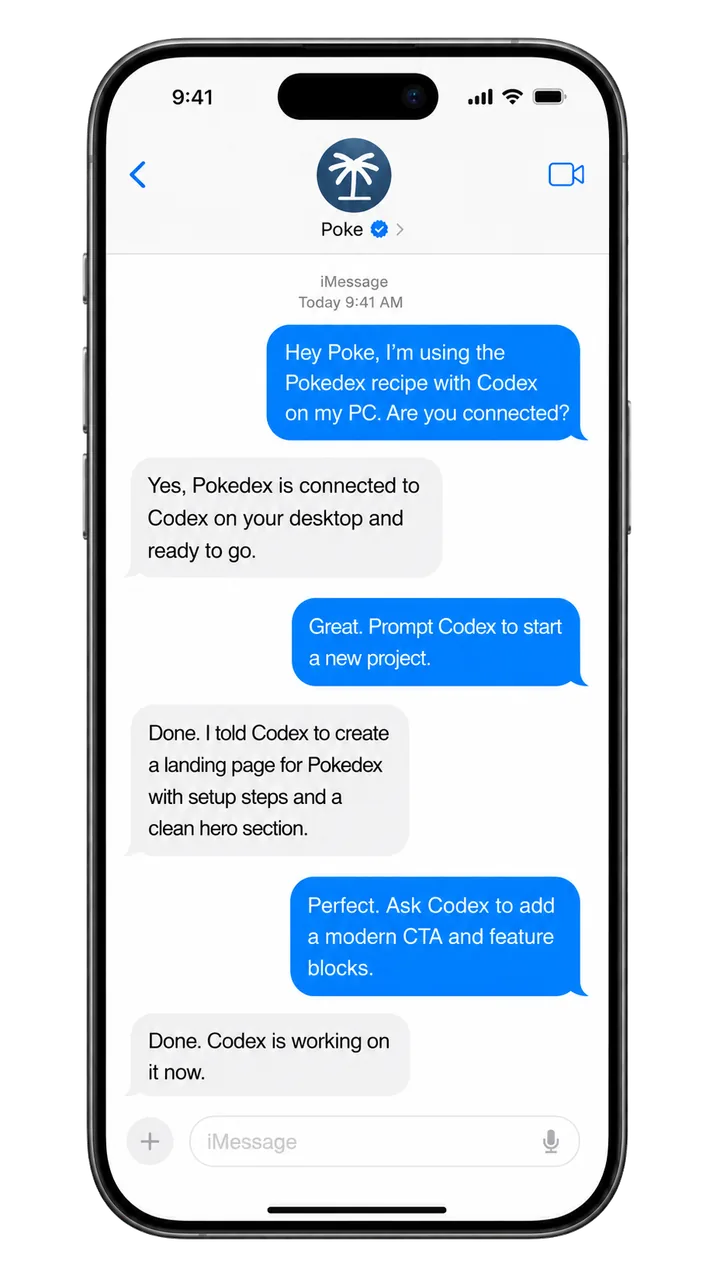
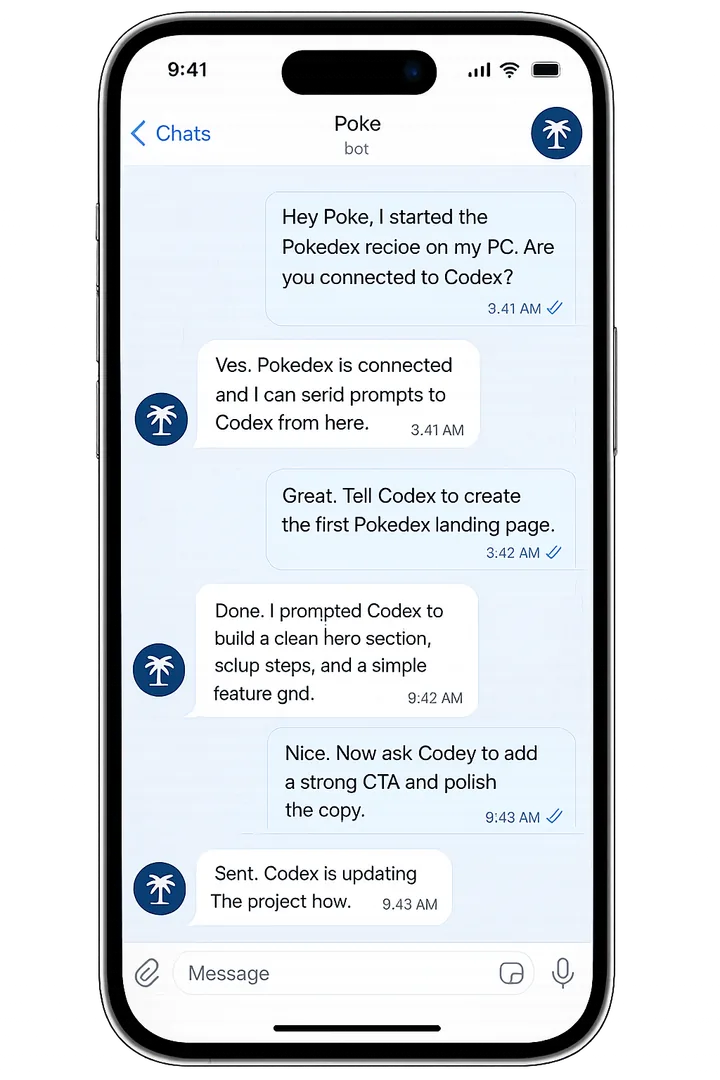
The recipe connects Poke to your local Codex bridge
Poke
Add the Pokedex recipe to Poke, then ask for work in a named workspace.
Pokedex Relay

The local MCP relay validates the shared token and forwards typed tool calls to the connected agent.
Agent + Codex
Runs on your computer, enforces workspace access, and drives the Codex app-server for each request.
Same features, different interfaces.
Native Codex threads
Start, continue, resume, read, fork, interrupt, and review real local Codex app-server threads.
Operation tracking
Poll long-running turns, inspect last progress events, detect stalled work, and avoid duplicate retries.
Approvals & access
List Codex approvals, approve once or for a session, and keep sandbox access gated by local workspace policy.
Git check, commit, push
Check identity, remotes, credentials, workspace access, then commit and push through structured Pokedex git tools.
Full Codex controls
Override model, profile, reasoning effort, verbosity, approval policy, web search, sandbox, and Codex skills per supported turn.
Read-only by default
Codex can read by default. Write and full-access modes require both global and per-workspace gates.
Yours by default.
Pokedex is open-source and MIT-licensed. The repository contains the CLI, relay, agent, protocol, security helpers, and Codex runner packages.